Frequently asked questions about Teylers Museum
Where does the name ‘Teylers Museum'
come from? Who was Teyler?
Pieter Teyler was a rich silk
merchant from Haarlem
who later became a banker. It is sometimes claimed that the name ‘Teyler' was
derived from the English word, ‘taylor'.
Teyler lived in the Fundatiehuis (literally
‘Foundation House'), next door to what is now Teylers Museum.
A strong supporter of 18th-century Enlightenment ideals, he believed that it
was it important for people to improve their knowledge, for ‘knowledge is
power, bringing them independence and greater happiness.'
When he died, he left a huge legacy - equivalent in
today's terms to some EUR 80 million. He also stated in his will that he wished
to set up a place where everyone would be able to gain knowledge. Five of his
friends decided that a museum should be established: Teylers Museum.
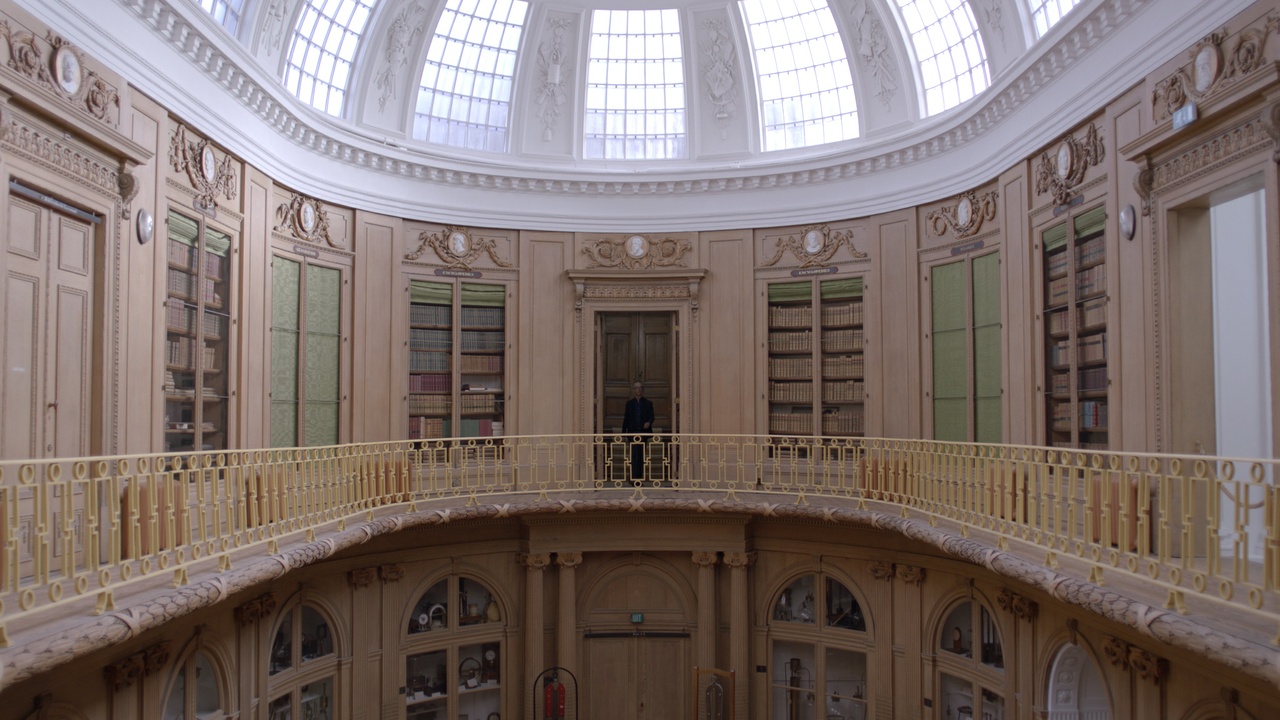
In the garden of Teyler's house, an Oval Room was built.
At first, it was reached through Teyler's old house, using the front door on Damstraat.
Teyler did not leave a noteworthy collection of his
own. Instead, exhibits for the new museum - art works and scientific objects -
had to be purchased.
What are the museum's opening times?
For details on opening times and admission charges, click here.
Why are some of the museum's rooms so
dark?
Teylers Museum was first opened in 1784, long
before the invention of electric light. The Oval Room - the first room to be
built - was lit by the daylight that entered its high windows. Later, other
rooms were added; later still, gas lighting was installed.
But even today, the permanent collection is still a
little dark, especially on a winter's day. As the Netherlands' first and oldest
museum, Teylers should be seen in the most authentic possible state. Thus, even
today, it is still lit by the daylight that enters through the windows and, in the
Paintings Galleries, through the glass ceilings. Lights in the Prints and
Drawings Room are deliberately kept dim, to protect its works against fading
and discoloration.
If the museum is open in the evening, it is of course lit
by electricity throughout. Sometimes, however, special tours of the permanent
collections are given by torchlight. These are announced in the calendar.
Finally there's our Exhibition Gallery, which was
built in 1996. This uses the very latest types of lighting.
What do fossils have to do with
paintings, or scientific instruments with coins?
In Pieter Teyler's opinion, art and science both provided means of learning - a
view very characteristic of the Enlightenment, a key period in the 18th
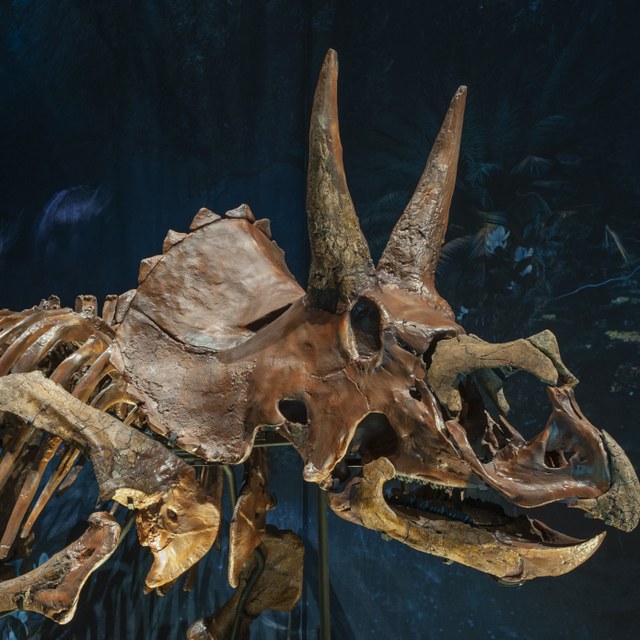
century. So even though the collections are very different (featuring paleontology,
mineralogy, instruments, medals, coins, paintings and prints), they create a
single entity that, somewhat like an encyclopedia, helps you understand the
world.
What is the oldest part of museum?
The Oval Room, now at the heart of the museum
buildings. The very first museum room in the Netherlands, it adds to the
uniqueness of the museum as a whole. Today, visitors use it to view the
exhibits - prints, books, minerals and physics instruments - but in earlier
days it was a forum for experiments, such as those that used the large electrostatic
generator. There were also lively debates between scholars and people of
learning.
The two hundred and twentieth anniversary of the Oval
Room falls in December 2009. This will be celebrated with a programme of
activities and the opening of a digital archive.
Where are the drawings by Rembrandt and Michelangelo?
Teylers Museum has an impressive collection of drawings and prints by Rembrandt and Michelangelo.
In fact, no other museum in the Netherlands
has so many drawings by Michelangelo - 26 in all. Unfortunately, because they're so fragile,
it's impossible to show them in the permanent collection, as they would be
damaged by too much light. To enable our visitors to get a glimpse into such
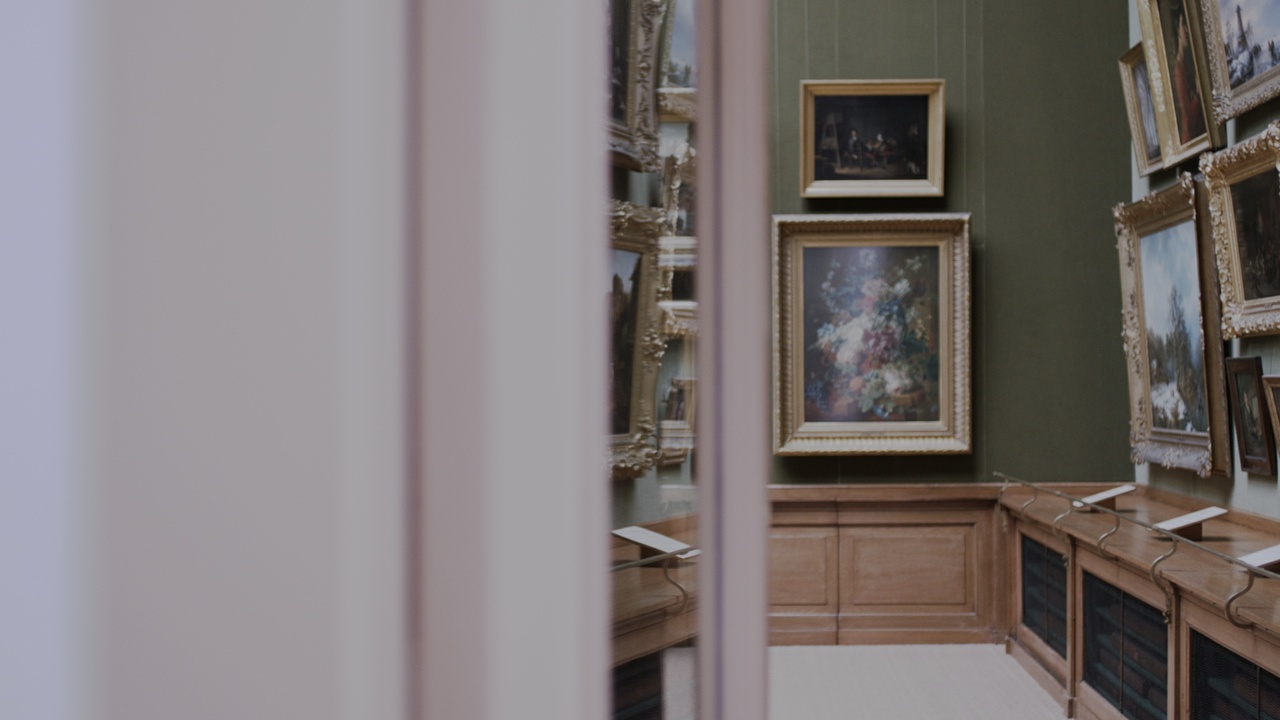
riches, we have therefore made replicas that can be examined in Paintings
Gallery I.
In 2005, Teylers Museum devoted a large exhibition to work by Michelangelo; it attracted
nearly 100,000 visitors. A dedicated website was also made for the
exhibition.
International museums often approach Teylers to loan
works from its collection.
What was the building used for before
it became a museum?
What makes Teylers
Museum so special is that
it was always a museum. It is not a
palace where royal collections are shown: it was built specifically for the
purpose - well over two centuries ago. The Oval Room was designed at the end of
the 18th century by architect Leendert Viervant as a boek- en konstzaal - an ‘art and book room'. Visitors not only
looked around it, but were also present when physics experiments were conducted
and when debates took place. For people wanted to know how the world worked.
They reached the Oval Room through Pieter Teyler's
residence, the Fundatiehuis. Later in the 19th century, the Oval Room was
extended, for example by the addition of the Instrument Room, the Fossil Room
and the entrance hall. Later still, the Paintings Galleries were
built. At the end of the 20th century a
modern Exhibition Gallery was added, as were a Prints and Drawings Room, Rare Book
Room, a large, light Museum Café, and an Educational Centre. This century,
other facilities have followed, such as a Museum Shop and Multimedia Room. The latter were designed by Hubert-Jan Henket.
Why can't I operate the instruments
myself? Does the museum ever
show them in action?
The instruments in Teylers Museum's collections are
fragile. In some case they are historically unique. Although it might be very educative to see them in action,
demonstrations would put their survival at risk. The museum tries to compensate
for this by ensuring that guides give very lively explanations of how they
worked.
However, there is also a special website on these instruments
that allows you to see them from all angles. From / since the autumn of 2009 a new audiotour on this
part of the collection will be available free of charge. And the recent
addition of the Beta Lab for educational purpose now makes it possible to bring
school students almost literally into contact with phenomena such as light,
energy, power and sound - and also to experiment with them.
Why are there so many different signs - and why are some of
them confusing or illegible?
Teylers Museum is the
oldest museum in the Netherlands
- the museum of all museums, where the history of collecting is itself
exhibited. For this reason, it has been decided to give visitors the most
authentic possible experience of the history of the building and its
collections. That's why you will encounter signs and information media from very
different times - handwritten or typewritten signs, for example, but also our
audiotour. This website provides information in detail, and you can also
download a museum tour.
When buying their tickets, all visitors receive a
Compact Guide to Teylers
Museum. This contains
background information on the various parts of the collection.
What's the purpose of those iron
gratings in the floors?
When Teyers Museum opened in 1784, it was heated by
the latest, most advance technology: under-floor heating. Even today, artists
are inspired by the wonderful decorative patterns on the iron gratings.
Where's the café? And the toilets? The exhibition?
The shop? The Prints and Drawings Room?
There's a map of the museum on the website, and
also in the Compact Guide to Teylers
Museum which visitors receive
with their ticket. To ensure that the Netherlands' oldest museum
maintains its authentic appearance, the signage in the rooms has been kept very
modest.
Can I visit the library and the other historical rooms on
the first floor?
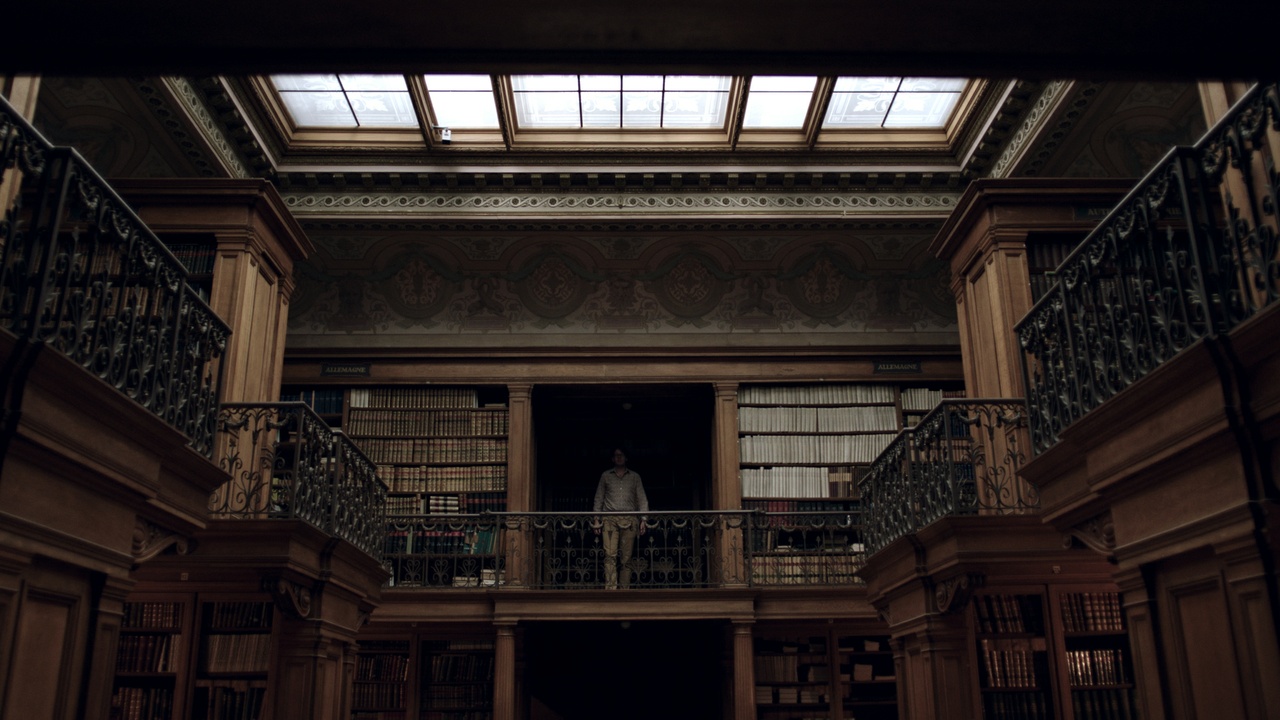
The Upper Room in the Library is one of the most
attractive rooms in the museum. Built in 1885 as part
of the ‘new museum', it is on the first floor. While, unfortunately, it is not open to the general public, it is included
in an exclusive guided tour, for which appointments can be made. This tour also
includes the museum's historical Auditorium.
The walls of the Upper Room are completely lined with bookshelves. More
bookcases stand at right-angles, forming alcoves in which there are tables for
study. As in the Oval Room, a gallery
with a richly decorated wrought-iron balustrade runs across it. It is reached
by a staircase, and contains part of the museum's collection of scientific
journals, including the famous Philosophical Transactions published by the Royal
Society in London.
In the centre of the room is a large reading table; under which there are
cupboards containing folios. The room is lit by daylight that enters from
overhead.
No other library in the Netherlands
has such a full collection of fine 18th and 19th-century books on botany,
zoology and earth sciences. Altogether, it contains over 125,000 volumes of
books and journals. Major works were still acquired until about 1940. Since then, the museum has not kept pace with the sciences, and its
scope has become a historical one.